
top of page
Search

July Set a New Record: The Scorching Heat Took a Centre Stage

  • Writer: Rhituja Bhorade
    Rhituja Bhorade
  • Aug 12, 2023
  • 2 min read

Updated: Apr 7


In Apollana, Rhodes, Greece, a man stands prepared to combat the raging flames engulfing a hillside on 27th July | Photo credit : Dan Kitwood

In a nutshell, July 2023 officially clinched the title of the hottest month on record, as confirmed by Copernicus Climate Change Service (C3S) and World Meteorological Organization (WMO).

Based on Copernicus research, preliminary analyses indicated that the world experienced temperatures warmer than it had in 120,000 years.

Throughout the northern hemisphere, extreme heatwaves raged, scorching vast areas of southern Europe, the US, and China.

The combination of heat and dryness intensified wildfires, leading to their widespread outbreak in both Canada and the Mediterranean region.

As July 24 approached, Sicily (Italy) endured intense temperatures exceeding 47.5°C, while Greece grappled with devastating wildfires.

Furthermore, press releases from Leipzig University and the WMO and C3S indicated that July temperatures were about 1.5 degrees Celsius (2.2 degrees Fahrenheit) higher than preindustrial levels.
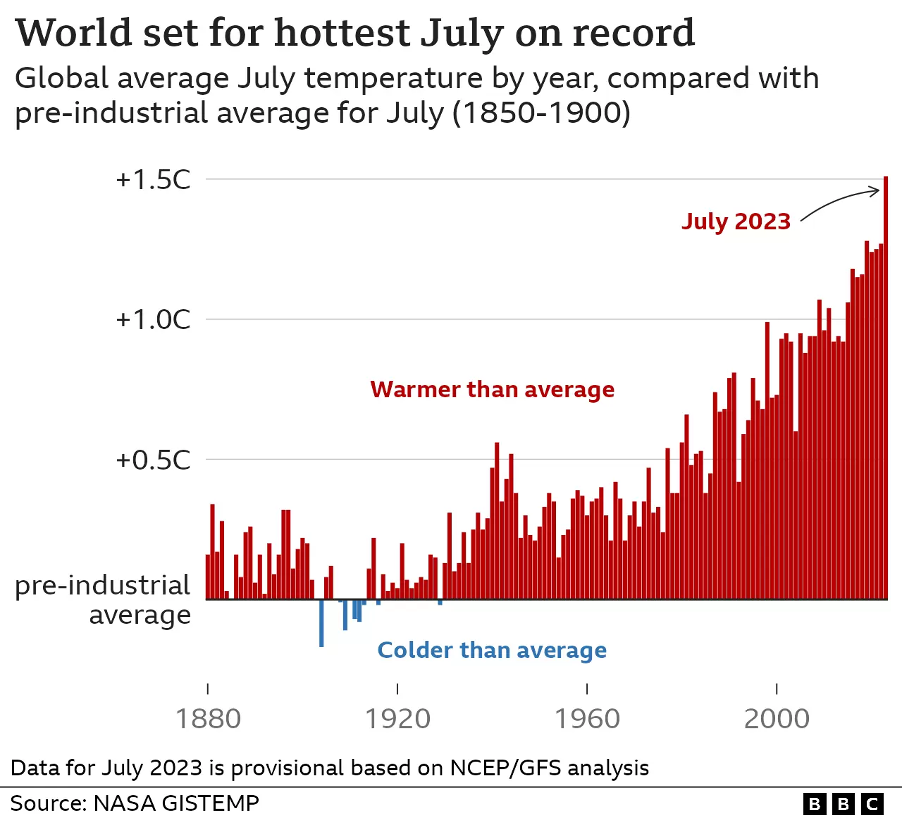

As you absorbed the sight of the soaring temperatures on the graph above and perhaps recalled those sweaty and irritable moments, curiosity likely arose.

Why did the temperatures surge in the month of July?

The record-breaking temperatures we are witnessing are a reflection of the alarming trend of significant increase in global temperature, according to Carlo Buontempo, Director of C3S. He emphasizes that human-caused emissions are ultimately the driving force of these rising temperatures.

The Leipzig University study also noted the arrival of El Niño, a climate pattern, in May, which contributed to the rise in global temperatures. When combined with the effects of climate change, this climate pattern increases the likelihood that more months may witness record-breaking temperatures this year.
El Niño, a part of El Niño-Southern Oscillation cycle, involves occasional warming of sea surface temperatures triggered by changes in wind strength and ocean temperatures in the central and eastern tropical Pacific Ocean.

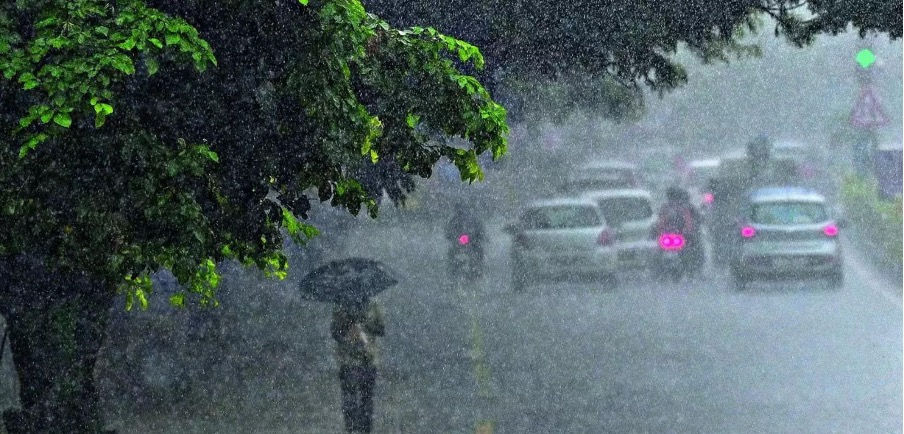
These El Niño events typically last 9 to 12 months, causing commotion in the atmosphere and resulting in wild weather patterns around the world, like unexpected heatwaves, droughts, and unusual rains.

Studies have shown that an increase in the magnitude and frequency of El Niños in the recent decades has accelerated this warming.
However, in terms of North America, this El Nino is really just getting started according to Dr. Becker from National Oceanic and Atmospheric Administration.

Aside from global warming, scientists are looking into changes in the jet streams, which is a strong, narrow band of fast-moving air currents high up in the Earth's atmosphere that influence weather patterns all across the world. The reducing temperature differential between the Arctic and the Equator in the Northern Hemisphere could be weakening the subtropical jet stream, leading to prolonged heatwaves.

Nevertheless, further research is necessary to understand this potential shift in the jet stream and its impact.

Amidst these investigations, the primary factor behind the unprecedented heat remains the impact of human-induced climate change.

In light of scientists' confirmation that July was on track to become the hottest month on record, UN Secretary-General António Guterres proclaimed that the age of global warming has concluded, giving way to what he refers to as the "era of global boiling."


Comments


Top Stories

Bring insights on the atmosphere and beyond straight to your inbox.

Sign up to stay updated!

© 2023 Weather Unleashed. All rights reserved.

Thanks for submitting!

bottom of page